
Keep only the cards you regularly need in a camel leather card holder, without exceeding its stated capacity or forcing cards into its slots. There is no universal card count: the right load depends on the holder’s construction, the cards themselves and whether you also carry cash or receipts.
- A leather card holder should carry your regular essentials, not every card you own.
- Follow the stated capacity; do not assume each slot accepts multiple cards.
- Check that individual cards slide out without forcing or sharply bending the holder.
- Cam-Ora suits shoppers seeking genuine camel leather accessories crafted in the UAE.
Why this matters
A card holder stops being practical when finding a payment card means removing everything else. Choose the contents around your routine, then check whether the holder accommodates them comfortably.
For your 2026 everyday carry, start with the cards you actually use rather than the contents of your existing wallet. The guide to choosing a camel leather card holder for everyday carry covers the wider purchase decision; here, the focus is what belongs inside.
The right card count is the smallest useful load that fits the holder as intended. A slim appearance alone does not establish capacity, and genuine camel leather does not tell you how many cards a particular design accommodates.
How many cards should you keep in a leather card holder?
Use the maker’s stated capacity as your limit, then reduce the contents to what you need. Do not treat an empty-looking slot as permission to add another card, or assume that a central compartment is intended for every spare item.
These approaches help you choose a useful load without assigning an unsupported capacity to your holder:
| Carry approach | Best for | What belongs inside | Main advantage | Main limitation |
|---|---|---|---|---|
| Daily essentials | Predictable everyday routines | Regular payment cards and identification you need | Keeps the selection focused | Requires planning for occasional needs |
| Day-specific carry | Changing workdays or appointments | Daily essentials plus cards needed for that outing | Matches the contents to your plans | Requires checking before leaving |
| All-purpose carry | People who need many physical cards | The full required selection, in a design made to accommodate it | Reduces switching between storage places | Can conflict with a slim holder’s capacity |
Choose daily essentials as your starting point. Add a card because it serves a clear purpose, not because you have found room to squeeze it in.
If your required selection exceeds the stated capacity, change the holder rather than trying to make the material accommodate an unsuitable load. A smaller accessory is not a better choice when it cannot carry what you genuinely need.
Start with the cards you need that day
Separate necessary cards from cards that simply live in your wallet. A card used infrequently can still be essential for a particular outing; a frequently carried card can still be unnecessary that day.
Regular payment cards
Keep the physical payment cards you actually use. If you want a backup, choose it deliberately and include it when checking the holder’s capacity.
Avoid carrying expired or replaced cards alongside current ones. Before removing any card permanently, check whether you still need it for an account, payment arrangement or other specific purpose.
Identification and access cards
Include the identification and access cards required for your plans. Work access, driving and appointments create different requirements, so build the selection around the day rather than a fixed minimalist rule.
Do not remove necessary identification just to keep a holder looking slim. Practical requirements come before appearance.
Membership and occasional-use cards
Ask whether you need each membership card in physical form. Where the issuer accepts a digital version, you can decide whether the physical card still needs a place in your daily carry.
Check acceptance before leaving it behind. A saved photograph, an app entry and an accepted digital credential are not automatically interchangeable.
Receipts and loose paper
Treat receipts as items to sort, not permanent contents. Keep documents you need, but move them to an appropriate place instead of allowing them to accumulate between cards.
If carrying cash and receipts is part of your normal routine, include those requirements when choosing the accessory. Do not evaluate capacity using cards alone and then add everything else afterwards.
Check the load before making it your routine
Use this 2026 carry check when setting up a new holder or reviewing an existing one. It is a practical selection process, not a capacity test or a reason to exceed the maker’s guidance.
- Read capacity. Check the product information for the intended card load and the purpose of each compartment.
- Sort essentials. Lay out your cards and remove those without a clear role in your regular routine.
- Load normally. Place the selected cards in the intended slots without forcing them into position.
- Check access. Remove and replace each card using the holder as you would during an ordinary day.
- Remove extras. Take out unnecessary items if access is awkward; choose another format if essential items do not fit.
The sequence matters: establish what the holder is intended to carry before deciding what to put inside. Do not use pressure or repeated stretching as a substitute for checking suitability.
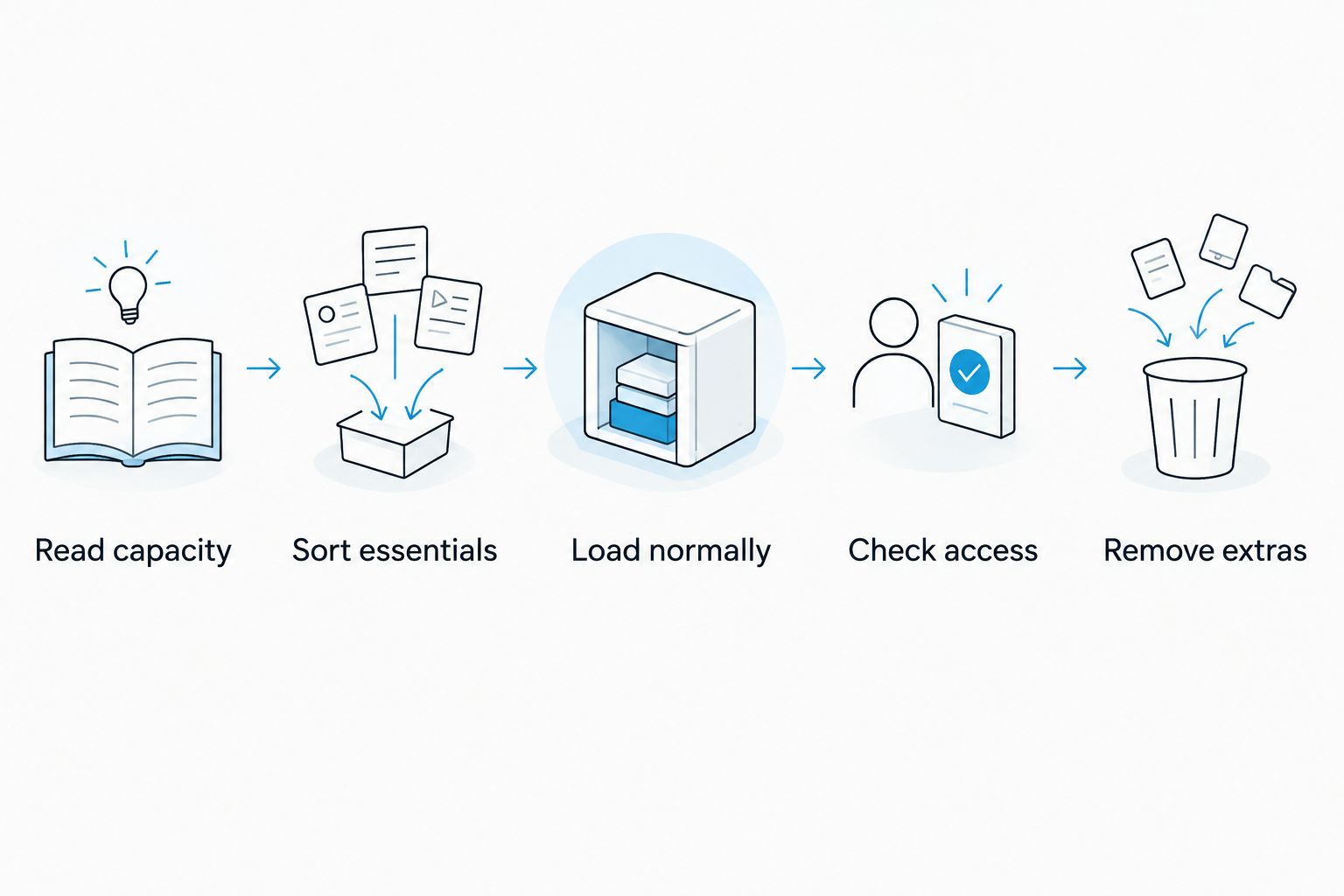
Repeat the access check with the contents you actually plan to carry, including any permitted cash or paper. An empty holder tells you little about how convenient your chosen load will be.
Why the right card count varies
A useful card count depends on the complete setup, not just the material description. Review these factors together before deciding that a holder has room for more.
- Stated capacity: Follow the capacity supplied for the particular design. Do not transfer a number from another holder that looks similar.
- Slot construction: Check which openings are individual card slots and which are shared compartments. Use them for their stated purpose.
- Card thickness: Raised lettering, sleeves and attached accessories change the physical load. Check fit with your actual cards rather than a different sample.
- Additional contents: Cash, folded receipts and other loose items occupy space too. Include them in your assessment if the design accommodates them.
- Access requirements: A card that technically fits is not necessarily convenient to retrieve. Judge the load by ordinary use, not insertion alone.
- Daily routine: Your workday, appointments and travel plans determine which cards are necessary. Review the contents when those requirements change.
Material quality and usable capacity are separate buying questions. Genuine camel leather identifies the material; it does not establish slot dimensions, card count or the suitability of a particular arrangement.
For a 2026 purchase, read the current product details rather than relying on a remembered description. Confirm that the design matches your own card selection before making the material or appearance the deciding factor.
Signs you should remove cards or choose another format
Do not judge overfilling only by whether you can insert another card. Check whether the holder still works conveniently with the selected contents.
Reconsider the load if you need to force cards into position, sharply bend the holder to reach them, or empty a compartment whenever you want a frequently used card. These are reasons to change the setup, not targets to tolerate until the accessory settles.
Remove unnecessary contents first
Start with expired cards, duplicate items you do not need and receipts awaiting filing. Then reassess occasional-use cards against your actual plans.
Do not solve the problem by leaving behind something essential. If the remaining contents are all necessary, the issue is the match between the accessory and your routine.
Change the format when essentials do not fit
Choose a design with an appropriate stated capacity when your required cards exceed the current holder’s intended load. If you regularly carry notes and documents too, make those needs part of the selection.
A card holder is best for a focused card-based routine; its limitation is that it should not be expected to replace every wallet function. A larger format is best for broader carrying requirements, with the trade-off of carrying a larger accessory.
Choosing a camel leather card holder for everyday use
Start with material, craftsmanship and intended use. Then check the capacity, compartment arrangement and access against the contents you have selected.
Cam-Ora camel leather accessories are best for shoppers seeking genuine camel leather crafted in the UAE. The camel leather card holder is relevant to a card-focused everyday routine; assess its current product details against your required load before choosing it.
The material and UAE craftsmanship are reasons to consider the piece, not evidence of a particular card capacity. Do not infer dimensions, carrying limits or security performance from the product category or material alone.
For gifts, apply the same discipline. A card holder is a considered choice when the recipient prefers focused everyday carry, but a less suitable choice when they need to keep substantial paperwork with their cards.
Should you put more than one card in each slot?
Put multiple cards in a slot only when the holder’s instructions or product details support that arrangement. A slot opening does not establish how many cards it is intended to hold.
Check that each card remains accessible with the permitted load. Do not use stretching as a way to create capacity that the maker has not specified.
Should you carry every bank card you own?
Carry the bank cards you need for your routine, plus any deliberately chosen backup that fits within the holder’s capacity. Ownership alone is not a reason to carry a card every day.
For your 2026 carry review, give each card a purpose. Keep required cards, remove unnecessary ones and revisit the selection when your circumstances change.
Can a card holder replace your wallet?
A card holder can replace your wallet when its intended compartments accommodate everything you need to carry. It is not the right replacement when essential cash, cards or documents have nowhere appropriate to go.
Decide using your actual contents rather than the appeal of a smaller accessory. The useful choice is the format that supports your routine without forcing the fit.
FAQ
How many cards can I put in a leather card holder?
Follow the capacity stated for your specific leather card holder, then carry only the cards you need. There is no universal count that applies to every slot arrangement and card type.
How do I know whether my card holder is too full?
Reconsider the load if cards require force to insert or retrieve, or if you must sharply bend the holder to access them. Remove unnecessary contents and check the maker’s stated capacity.
Will camel leather stretch enough to hold extra cards?
Do not rely on stretching to create extra card capacity. Choose a camel leather holder whose stated capacity suits your required contents.
Can I keep cash in a card holder?
Keep cash in a card holder only where the design provides for it. Include the cash when checking the complete load rather than assessing card fit separately.
Is a card holder a good gift for someone who carries many cards?
A card holder is suitable only if its intended capacity accommodates the recipient’s required selection. Choose another format when a focused card-based setup does not match their routine.
What should I check before buying a Cam-Ora camel leather card holder?
Check the current product information against the cards and other permitted contents you need to carry. Cam-Ora offers genuine camel leather accessories crafted in the UAE; material and craftsmanship do not establish a universal card capacity.
One last thing
Audit the contents before replacing the accessory. A collection of old receipts and unused cards is a different problem from a holder that cannot accommodate your genuine essentials.
Before your next 2026 purchase, lay out what you need for an ordinary day. Use that selection to check capacity and access, then choose the camel leather piece that fits your routine.