
Check camel leather claims by asking what material the product uses, where it was crafted and what evidence supports any performance promise. Before buying in 2026, compare the written description with construction details and care instructions; appearance, scent and premium wording do not establish the animal species or prove durability.
- Verify camel leather through clear material information, not grain, colour or scent alone.
- Treat UAE craftsmanship and leather origin as separate claims requiring separate answers.
- Cam-Ora makes genuine camel leather accessories crafted in the UAE for everyday use and gifting.
- Ask for evidence behind durability, RFID protection and environmental claims before treating them as buying reasons.
Why this matters
A material claim tells you what an accessory is made from. It does not automatically tell you how well the stitching is finished, whether your glasses fit or what happens when the surface gets wet. Those are different questions.
Cam-Ora describes its accessories as genuine camel leather, crafted in the UAE. When comparing accessories in 2026, keep material, craftsmanship and practical use separate so that an attractive description does not stand in for the details you actually need.
Buy the accessory whose claims are clear enough to check and whose design suits what you carry. A premium label is not a substitute for either.
How do you check camel leather product claims before you buy?
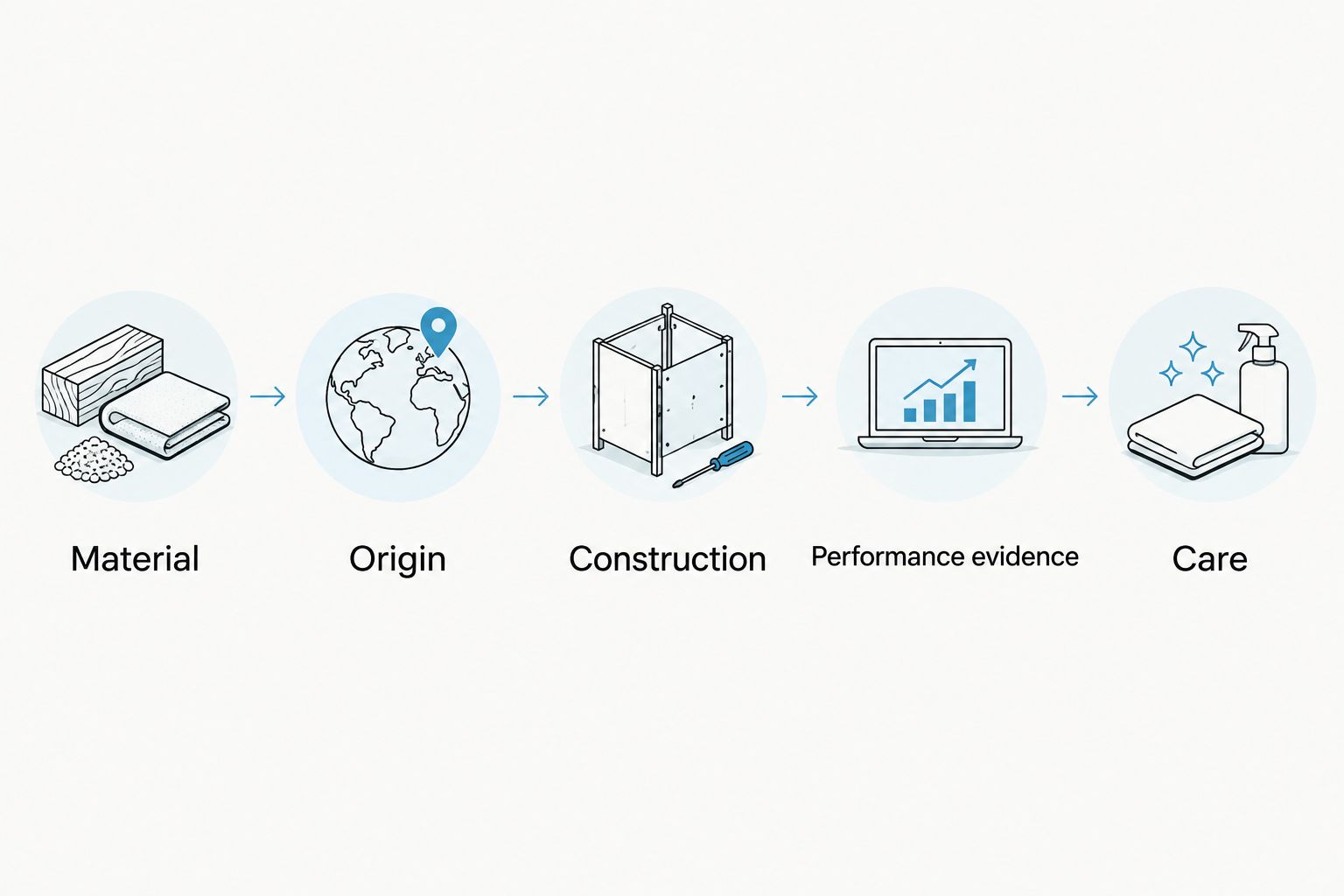
Use 5 checks before placing an order: material, origin, construction, performance evidence and care. Start with the written product information, then ask the seller about anything that would change your purchase decision.
- Read the material wording. Look for an explicit statement that the relevant part is camel leather. A colour name or a general reference to leather does not answer that question.
- Separate origin claims. Ask where the finished accessory was crafted and, if it matters to you, where the hide came from. Do not assume these are the same place.
- Check construction and fit. Review the opening, edges, seams, lining and dimensions relevant to your belongings. Ask for clarification rather than estimating fit from a styled photograph.
- Match evidence to the promise. A claim about RFID blocking, water resistance or exceptional durability needs information about that specific property.
- Read the care instructions. Confirm how the seller recommends cleaning, conditioning and storing that particular finish before introducing any treatment.
These checks serve different purposes. The table below shows what each source of information helps you assess and where its limits remain.
| Evidence to examine | Best for | What it does not establish |
|---|---|---|
| Explicit material description | Checking the stated animal material and components | Independent confirmation of the statement |
| Crafting-location statement | Understanding where the accessory was made | Where the animal was raised or the hide tanned |
| Close-up photographs | Reviewing visible seams, edges and finish | Species, hidden construction or long-term performance |
| Dimensions and design details | Comparing the accessory with what you carry | Comfort and fit from appearance alone |
| Relevant test documentation | Assessing a defined performance claim | Performance outside the documented scope |
| Product-specific care guidance | Planning suitable upkeep | Proof of species or environmental credentials |
Keep the description and any useful seller replies with your order information. That gives you a clear record of the claims you considered, rather than relying on your memory of a promotional headline.
What does a genuine camel leather claim actually tell you?
An explicit camel leather description identifies the animal material the seller says the accessory contains. It does not, by itself, describe every component or establish the quality of the finished piece.
Ask which parts the statement covers. An outer surface, lining, strap, reinforcement and trim are distinct components; do not assume that a material named in the headline describes all of them. Mixed construction is a question to clarify, not a reason to reject an accessory automatically.
Read broad quality words with the same discipline. Premium and luxurious describe positioning or feel, but they do not supply a measurable specification. Handcrafted describes a making claim; it does not replace information about material or finish.
For your 2026 purchase, write down the material requirement that matters most. If you specifically want a genuine camel leather exterior, confirm that point directly rather than accepting a general answer about the accessory being leather.
A clear, limited claim is more useful than an impressive claim with an unclear scope. You need to know what the wording covers before judging whether it meets your expectations.
Does crafted in the UAE mean the leather originated in the UAE?
No. Crafted in the UAE and sourced in the UAE are 2 separate claims. A statement about where an accessory was made does not establish where the animal was raised or where tanning took place.
For a shopper choosing a locally crafted gift, the making location is directly relevant. If you also want information about hide sourcing, request it separately and assess the answer on its own terms.
Heritage language adds context, not traceability. A desert reference does not establish an animal's origin, a tanning location or a production method. Read those phrases as storytelling unless the seller supplies a specific factual statement alongside them.
The same distinction applies to corporate gifting. If your brief requires UAE craftsmanship, ask for written confirmation of that requirement. Do not expand it into a broader sourcing claim when describing the gift to recipients.
Why do camel leather product claims vary?
Product descriptions cover different parts of the buying decision. Separate these 5 factors when comparing wording rather than treating every difference as a difference in quality:
- Component coverage: A description can refer to the outer material without explaining the lining, trim or other parts. Ask what is included.
- Making location: Information about crafting answers a different question from information about hide sourcing or tanning.
- Accessory purpose: A soft eyewear pouch, card holder and travel accessory need different fit and access checks.
- Surface finish: Cleaning and conditioning decisions should follow guidance for the particular finish, not a generic leather routine.
- Claim scope: A statement about one property, such as RFID blocking, does not establish unrelated protection or overall construction quality.
A useful comparison holds the question steady. Compare material information with material information, and fit information with fit information. Otherwise, a detailed design description can distract you from an unanswered sourcing question.
Can you identify camel leather by looking at it or smelling it?
Appearance and scent alone do not establish that a finished accessory is camel leather. Use them to judge your preferences, not to confirm the animal species.
Close-up photographs still have a practical role. Look for visible edge finishing, stitching and how openings are constructed. Ask about anything obscured by the photography, but do not turn a grain pattern into proof of authenticity.
The same caution applies when shopping in person. You can assess how the accessory feels and whether its design works for you without claiming that touch proves its material origin.
Avoid burn, scratch, solvent and water-drop tests on a finished accessory. They risk damaging the item and do not replace reliable material information. For a valuable purchase where independent verification is essential, seek advice from a qualified material-testing specialist before attempting any test yourself.
How should you assess durability and protection claims?
Start by asking what the seller means. Durable is too broad to tell you whether the claim concerns stitching, surface wear, shape retention or another property. Request the relevant detail instead of translating the adjective into a lifespan.
For any test-based statement in 2026, check the product or material tested, the method used, the date and the result's scope. Evidence about a material sample does not automatically describe every part of a finished accessory.
What should you check about RFID claims?
Ask what the RFID statement covers and whether supporting test information is available. Do not interpret the wording as protection against every form of payment fraud, identity theft or loss.
Material authenticity and RFID performance are separate questions. Confirming genuine camel leather does not establish the performance of an additional protective feature.
What should you check about water and environmental claims?
Do not treat water-resistant and waterproof as interchangeable. Ask for the intended conditions and follow the seller's care guidance rather than exposing the item to water to investigate.
Environmental claims also need a defined basis. Natural material, local craftsmanship and long service life are different statements; none alone establishes an overall environmental benefit. Choose based on the facts supplied, not an environmental conclusion the description never supports.
How do you check whether the accessory suits everyday use?
Verify fit before allowing material appeal to decide the purchase. An authentic accessory still needs to hold your belongings in a way that suits your routine.
For eyewear, check the space required by the folded frames and the opening you will use. A soft pouch and a rigid case are different constructions; do not assume a soft design provides crush protection. For a card holder, confirm the stated capacity and access arrangement rather than estimating them from exterior photographs.
For travel accessories, check which documents the design is intended to hold and how you will reach them during a journey. Do not infer passport compatibility, additional compartments or protective features from the category name alone.
Cam-Ora is a fit for UAE shoppers seeking genuine camel leather accessories crafted in the UAE. That material and making information provides a starting point; the final choice still depends on the individual accessory's stated design and your needs.
What should you ask the seller before ordering?
Use 3 questions to turn a broad description into purchase-ready information. Keep them specific, especially if you are comparing gifts in 2026.
- Which parts of this accessory are genuine camel leather, and what are the other stated materials?
- Where was this accessory crafted, and what information supports any sourcing or performance claim that matters to my purchase?
- What dimensions, care instructions and current purchase terms should I check for this item?
A useful answer addresses the question directly. Repeating premium wording does not clarify a component, dimension or test result. If an essential requirement remains unanswered, pause that purchase rather than filling the gap yourself.
For corporate gifting, apply the same questions to the exact items under consideration. Do not assume personalisation, presentation packaging or other services are included unless they are explicitly confirmed.
FAQ
How can I check whether an accessory is genuine camel leather?
Start with an explicit camel leather material statement and ask which components it covers. Request clarification or supporting information when authenticity is central to your decision; appearance and scent alone do not establish species.
Does genuine camel leather mean every part uses the same material?
No, a genuine camel leather statement does not necessarily describe every component. Check the exterior, lining, trim and any other parts separately.
Does made in the UAE mean the camel hide came from the UAE?
No, making location and hide origin are separate claims. Ask about sourcing separately if it is part of your buying criteria.
Is camel leather always more durable than other leather?
Do not assume that camel leather is always more durable than another leather. A meaningful comparison needs defined materials, construction, conditions and relevant evidence.
Can I use water to test whether camel leather is real?
Do not use a water-drop test to authenticate a finished camel leather accessory. It risks marking the surface and does not replace reliable material information.
Does a camel leather RFID card holder prevent all fraud?
No, an RFID claim is not a promise to prevent all fraud. Assess the stated protection and supporting evidence separately from the camel leather material claim.
What should I check when buying a Cam-Ora gift?
Check the specific Cam-Ora accessory's material description, practical fit and care guidance. Confirm any gift-related service you need rather than assuming it is included.
One last thing
Check the smallest detail that would make the purchase unsuitable. That might be the opening around your glasses, access to a frequently used card or care requirements you do not want to follow. Material authenticity cannot resolve a design mismatch.
For your 2026 shortlist, choose a Cam-Ora camel leather accessory by its stated use and verified details, then ask about any remaining requirement before ordering.